


Why Most Brands Fail to Stand Out And How to Fix It
Being good is not enough anymore
Most brands are not failing because their products are bad.
They are failing because people do not remember them.
They have a decent logo.
A clean website.
A few social media posts.
Maybe even good service.
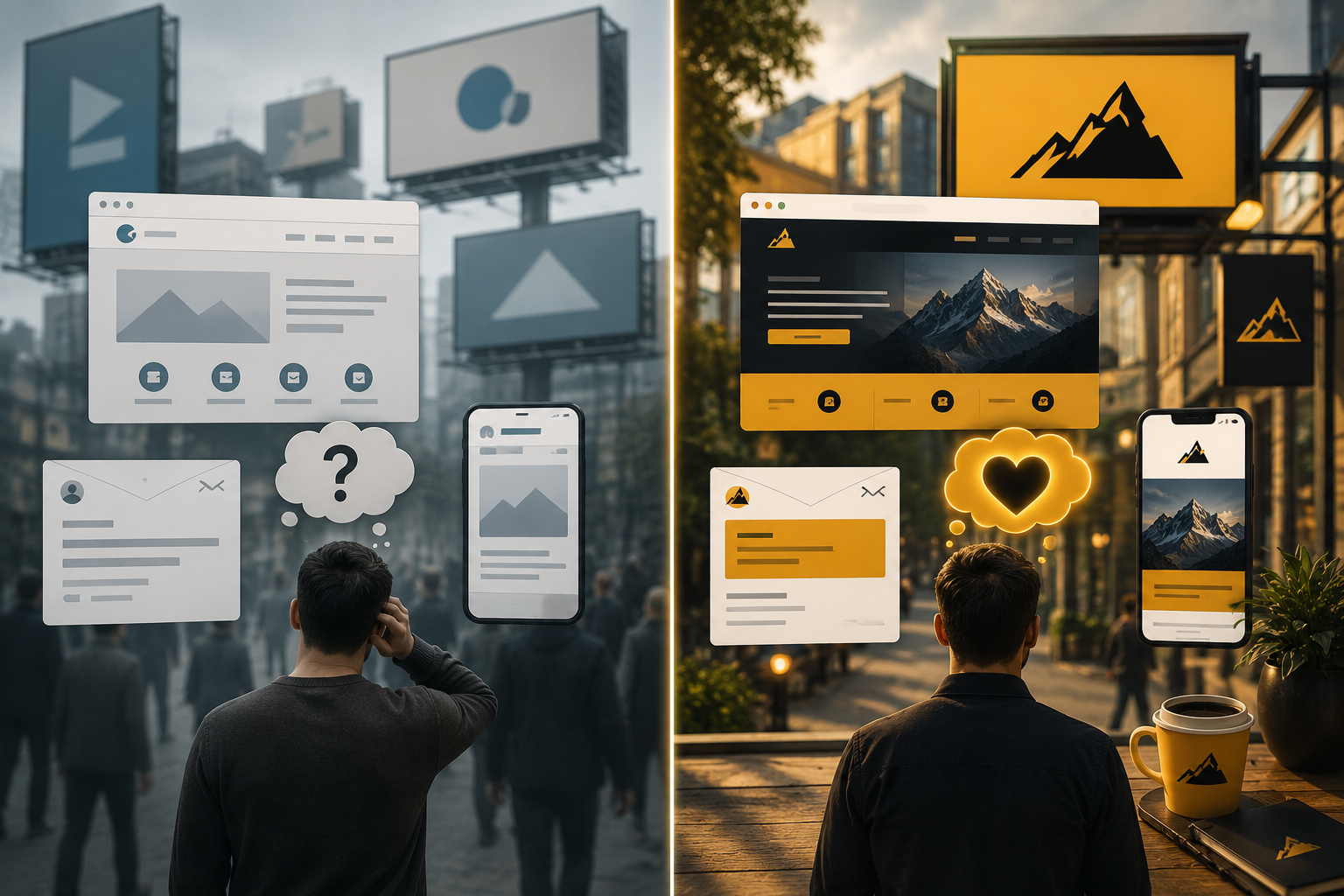
But when customers compare them to everyone else, nothing feels clearly different.
That is the real problem.
In a crowded market, quality alone does not make a brand stand out.
Clarity does.
The Real Problem: Most Brands Sound the Same
Look at how many businesses describe themselves:
- “We help businesses grow”
- “We provide quality service”
- “We deliver results”
- “Your trusted partner”
- “Innovative solutions for modern businesses”
These phrases sound professional, but they are too broad.
They do not tell people:
- who the brand is for
- what problem it solves
- why it is different
- why someone should choose it now
When your message could apply to almost any competitor, your brand becomes easy to ignore.
Why Brands Blend In
Most brands fail to stand out because they try to appeal to everyone.
They want to sound polished, safe, and professional.
But safe messaging usually becomes invisible messaging.
A strong brand does not try to say everything.
It owns one clear idea.
That idea becomes the reason people remember it.
Mistake #1: No Clear Positioning
Positioning is the foundation of differentiation.
It answers:
“Why should someone choose you over another option?”
Without positioning, your marketing becomes scattered.
Your website says one thing.
Your content says another.
Your visuals say something else.
And the audience feels confused.
A confused audience does not convert.
Mistake #2: Focusing Too Much on Services
Most businesses lead with what they do.
For example:
“We offer website design, branding, video production, and AI solutions.”
That explains the service.
But it does not explain the value.
A stronger message would be:
“We help businesses build a digital presence that attracts attention, builds trust, and turns visitors into leads.”
That communicates the outcome.
People do not buy services.
They buy transformation.
Mistake #3: Weak Visual Identity
Your visuals create a first impression before people read a single word.
If your brand looks inconsistent across your website, social media, videos, and presentations, people may question your credibility.
Strong branding uses consistent:
- colors
- typography
- imagery
- layout
- tone
- visual direction
Consistency builds recognition.
Recognition builds trust.
Mistake #4: Generic Content
Many brands post consistently but still fail to grow.
Why?
Because the content does not say anything distinct.
Generic content usually sounds like:
- tips everyone already knows
- captions with no opinion
- educational posts with no personality
- content copied from competitors
Strong content should show:
- your point of view
- your expertise
- your beliefs
- your process
- your results
The goal is not just to post.
The goal is to become associated with a clear idea.
Mistake #5: No Emotional Connection
People remember brands that make them feel something.
A brand that only talks about features can feel cold.
A brand that connects to real problems feels relevant.
Ask:
What frustration does your audience feel?
What outcome do they want?
What fear is stopping them?
What future are they trying to build?
The more your brand speaks to real human motivations, the more memorable it becomes.
Mistake #6: Trying to Look Like Everyone Else
Many brands unintentionally copy what competitors are doing.
They use similar:
- layouts
- colors
- phrases
- offers
- content styles
This feels safe, but it weakens differentiation.
If your brand looks and sounds like everyone else, customers will compare based on price.
And once you compete only on price, you lose control of perceived value.
How to Fix It
Standing out does not require being louder.
It requires being clearer.
1. Define What You Want to Be Known For
Your brand should own a specific idea in the market.
For MindActive, that idea could be:
Helping businesses build smarter digital systems through websites, branding, video, and AI.
That is much stronger than simply saying:
“We offer digital services.”
The clearer the idea, the easier it is for people to remember you.
2. Get Specific About Your Audience
A brand for everyone becomes meaningful to no one.
Define who you serve.
Examples:
- small businesses
- service-based businesses
- local companies
- clinics
- construction brands
- founders
- growing businesses that need stronger digital systems
Specificity creates stronger connection.
3. Clarify the Problem You Solve
Do not only describe your service.
Describe the problem behind the service.
For example:
Instead of:
“We build websites.”
Say:
“We build websites that help businesses convert visitors into leads.”
Instead of:
“We create branding.”
Say:
“We help businesses clarify their message so customers understand why they matter.”
Instead of:
“We create videos.”
Say:
“We create visual content that helps brands earn attention and build trust faster.”
4. Build a Consistent Brand System
Your brand should feel connected everywhere.
That includes:
- website
- social media
- ads
- videos
- blog posts
- email campaigns
- sales materials
When everything looks and sounds aligned, your brand becomes easier to trust.
5. Develop a Strong Point of View
Brands that stand out have opinions.
They do not just educate.
They lead.
Examples:
- A website should not just look good. It should convert.
- AI should amplify people, not replace them.
- Branding is not decoration. It is business clarity.
- Video should not just impress. It should move people to action.
These points of view make your content stronger because they give your brand a voice.
6. Use Storytelling
Facts explain.
Stories connect.
Use stories in your:
- website copy
- case studies
- blog posts
- videos
- social content
Show:
- what problem existed
- what changed
- what result happened
Stories make your value easier to understand and remember.
7. Align Brand, Website, Content, and AI
A strong brand does not work in pieces.
Your branding creates perception.
Your website guides action.
Your content builds trust.
Your AI systems improve efficiency.
When these work together, your business becomes more memorable and more effective.
That is where real growth happens.
The Bottom Line
Most brands fail to stand out because they are unclear.
They sound like everyone else.
They look like everyone else.
They communicate like everyone else.
The fix is not more marketing.
The fix is stronger positioning.
When your brand clearly communicates:
- who you help
- what problem you solve
- why you are different
- what outcome you create
People remember you.
And when people remember you, they are far more likely to trust you, follow you, and buy from you.
Ready to Build a Brand That Stands Out?
At MindActive, we help businesses clarify their brand, strengthen their website, create strategic content, and use AI to build smarter systems.
If your brand feels invisible in a crowded market, it may not need more content.
It may need a clearer identity.
Let’s talk.

What Is Brand Positioning and Why It Matters More Than Ever
In today’s market, being good is no longer enough. There are thousands of businesses offering simi
How to Build a Brand That People Actually Remember
Here’s an uncomfortable test. Cover your logo and read your own homepage. Could that page belo